Haven’t chosen your New Year’s resolution for 2022 yet? You’re never too late: Any day is the perfect day to start exercising and reaping loads of health benefits, like drastically reduced risks of heart disease, stroke, diabetes and even early death.
Just make sure your goal is really achievable: While many people like the sound of running 10 marathons or becoming a world champion powerlifter, keeping things simple in year one can help you build towards bigger goals with subsequent resolutions.
Your fitness goals should be challenging yet realistic. According to experts at Cañada College, “unattainable goals are often the cause of injury, frustration, and ultimately the discontinuation of exercise.” They recommend creating short-term goals that are more attainable in the beginning of your fitness journey.
So here are five fitness goals you can really achieve this year—and each is backed by science, so they’re really worth doing!
Goal 1: Walk 4,400 to 7,972 steps per day.
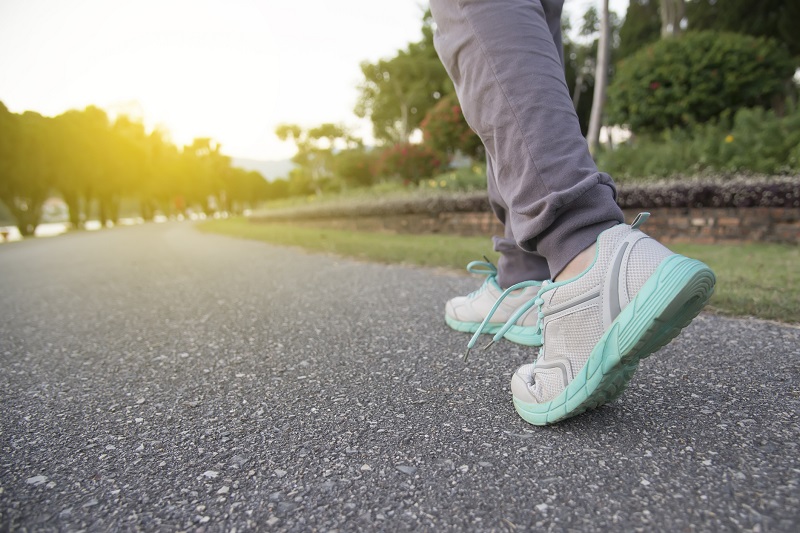
Thought the magic number was 10,000? Think again: The 10K number is said to have actually started as a marketing tool to sell pedometers in Japan in the 1960s.
That doesn’t mean that counting your steps is useless, though: In one study, older women who averaged 4,400 steps or more significantly reduced their risk of death compared to other women who walked about 2,700 steps per day. The researchers explain, “With more steps per day, mortality rates progressively decreased before leveling at approximately 7500 [steps per day].”
In another study of older adults, those who took 7,972 or more steps per day had a lower risk of death than walkers who logged less than 4,503 steps each day.
Use those results as your step goals: Strive to stride 4,400 to 7,972 times per day.
Goal 2: Do muscle strengthening activities twice a week.
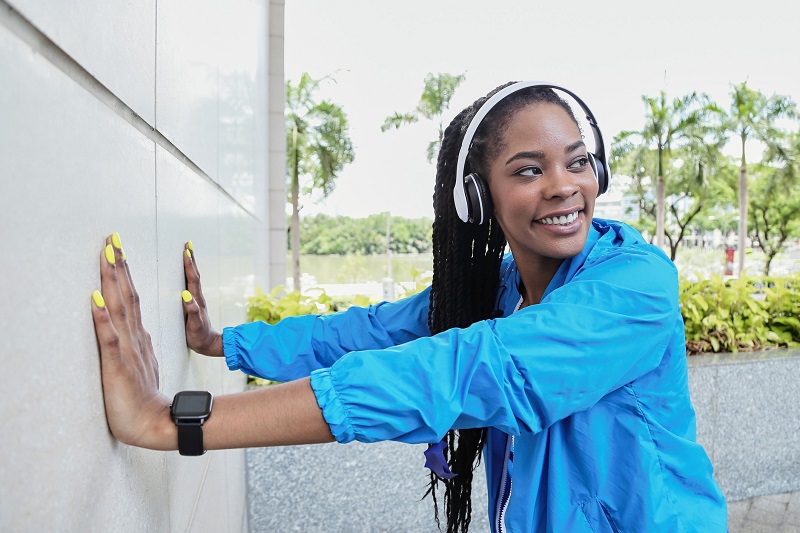
You often hear about the Centers for Disease Control and Prevention (CDC) recommendation to get at least 150 minutes a week of moderate-intensity aerobic activity. (That’s 30 minutes, five days a week.) But did you know that the CDC also recommends doing activities that strengthen muscles at least two days each week?
According to The American Council on Exercise (ACE), strength training can help strengthen muscles and bones, increase the metabolism, decrease blood pressure and improve quality of life. Maintaining your muscle as you get older is essential. “Unless you regularly engage in activities to strengthen your muscles, you’ll lose about a half a pound of muscle a year in your 30s and 40s, and that rate can double once you turn 50,” says ACE.
Your weekly strength training doesn’t have to be all at once, and it doesn’t have to be as intense as a CrossFit class. You can do easy dumbbell or resistance band workouts. No equipment? No problem! Try this simple, four-move series that uses your own body weight to boost your strength:
- Move 1 – Wall Pushups: Standing with your feet away from a wall, put your hands on the wall, and slowly control your body as you bend your elbows to move your torso towards the wall. Keep your body straight from head to heels as you press back to standing.
- Move 2 – Step Ups: On the bottom step of a staircase, place one foot on the step, and press through the center of your raised foot to straighten your leg until your other foot could meet it on the step. Step down, and repeat with the other leg.
- Move 3 – Squat to a Chair: Hover over a chair, and control yourself as you sit down, not using your hands. If you can, stand back up without using your hands.
- Move 4 – Glute Bridge: Lie face up on the floor with your knees bent and feet flat on the floor. Squeeze your glutes to raise your butt up until your body forms a straight line from head to knees. Slowly return to the start.
Do each exercise for 15-20 seconds, then rest until the next minute starts and move to the next exercise. Repeat in this way for 15 minutes.
Goal 3: Sleep for at least 7 hours per night.

Is sleep a fitness goal? You bet! In fact, it may be the most important one of all: According to the CDC, “Adults need 7 or more hours of sleep per night for the best health and wellbeing.” Consistently getting too little shuteye (less than seven hours a night) is associated with poor health outcomes, including weight gain, diabetes, depression, high blood pressure, stroke and heart disease.
In a review of research, published in the journal Sleep, scientists found that sleeping less than seven hours per night was associated with a 12 percent increased risk of early death compared to sleeping seven to eight hours per night.
Sleep is also key to achieving your other fitness goals: When you sleep, your body can repair your muscles and give you the energy you’ll need for your next bout of physical activity. So hit the hay this year!
Goal 4: Go for a 10-minute walk every time you eat.
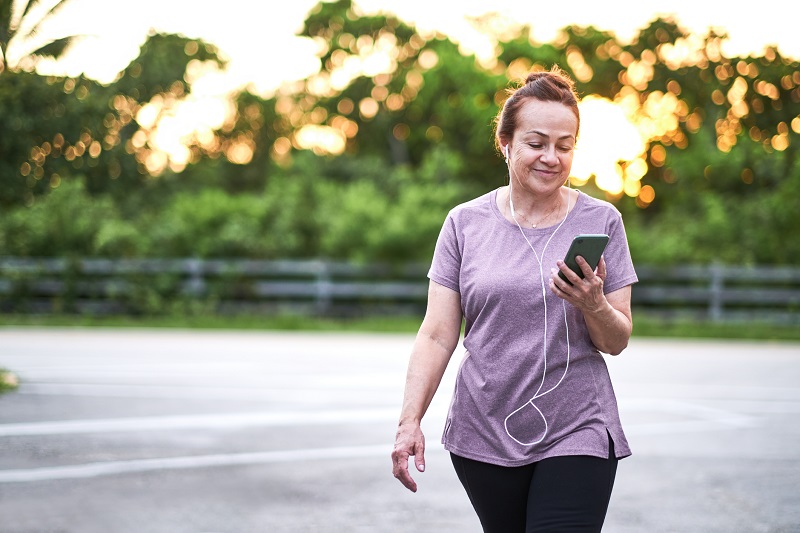
This is an easy way to get to that 4,400+ steps. Plus, timing your 10-minute walks with your three main meals will help you check off your 30 minutes of recommended physical activity. According to experts at Mayo Clinic, regular, brisk walking can help improve your cardiovascular health and decrease your risk of various conditions, including high blood pressure, heart disease, cancer and Type 2 diabetes.
Timing your walks for after meals has other potential benefits, too. According to Medical News Today, “Research suggests that a short walk after eating helps manage a person’s blood glucose, or blood sugar, levels. Moderate daily exercise can also reduce gas and bloating, improve sleep, and boost heart health.” Research has also shown that taking three 10-minute walks each day may reduce systolic blood pressure (the top number) in individuals with prehypertension.
So when you put down your fork, lace up your shoes!
Goal 5: Find a fitness activity that’s fun for you.
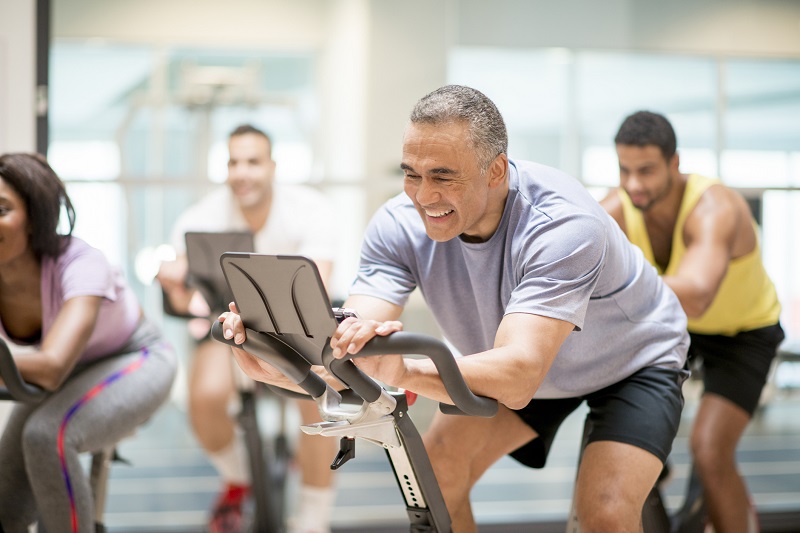
Too many Americans think exercise has to be painful drudgery to work. But the opposite is true: Studies show that when people enjoy their workouts, they’re more likely to actually do them. And it’s no secrete that an increase in exercise adherence can lead to better results.
If you’re going to spend 10, 20, 30 or more minutes of your free time doing something, it ought to be something that not only improves your health, but improves your mood. So while you’re walking and strengthening this year, resolve to find something about fitness you enjoy: Maybe it’s working out while talking on the phone with your best friend. Maybe it’s a new type of class or a new instructor that really gets you. Maybe it’s an active game or sport. Or maybe it’s a funny shirt that you love putting on each time you sweat. Find that thing you love, and you’ll create a habit that will last far beyond 2022.
*Always speak to your doctor before beginning a new exercise routine.
The post 5 Health and Fitness Goals for 2022 appeared first on The Leaf.
Comments
Post a Comment